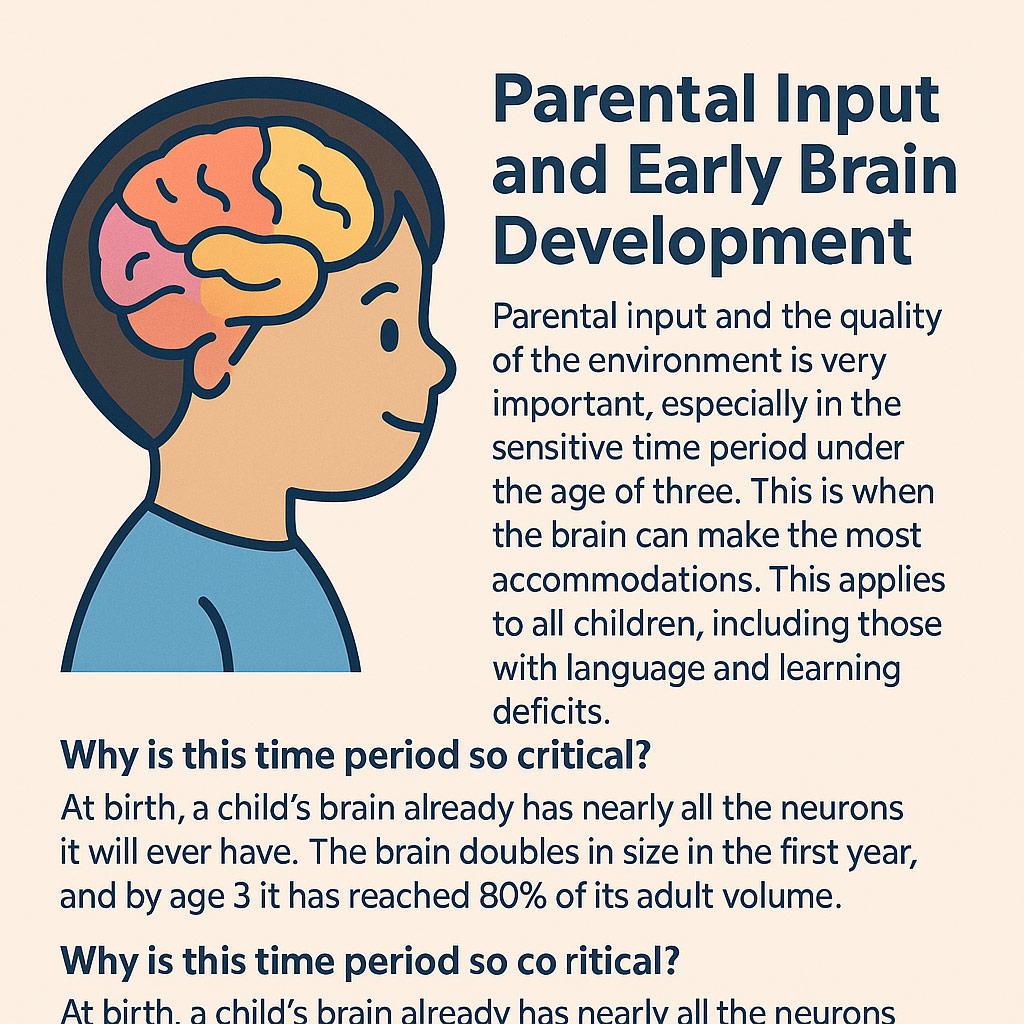
Parental input and the quality of the environment is very important, especially in the sensitive time period under the age of three. This is when the brain can make the most accommodations. This applies to all children, including those with language and learning deficits.
Why is this time period so critical?
At birth, a child’s brain already has nearly all the neurons it will ever have. The brain doubles in size in the first year, and by age 3 it has reached 80% of its adult volume.
When we speak to our children continuously throughout the day, we stimulate activity in language-related brain regions. The more speech a child hears, the more often synapses (connections between neurons) are activated. Repeated use strengthens these synapses, while connections that are rarely used remain weak and may be eliminated.
A child’s experiences not only determine what information enters the brain, but also influence how the brain processes information. This is why talking to your baby—even in early infancy—is so important.
By 3 months, sensory pathways for listening are already laid down in a baby’s brain.
Some researchers suggest that even in the last trimester before birth, a baby can recognize its mother’s voice through bone conduction.
By 6 months, the pathways for language learning are established.
How much language stimulation is needed?
According to researchers Betty Hart and Todd Risley, caregivers should be speaking at least 3,000 words an hour to their child. That equals about 15 minutes of rich language per hour, or about 30,000 words during a 9-hour day.
When parents used this level of conversational speech, their children developed larger vocabularies.
Face-to-face communication is crucial to building speech and language. Directing children from a distance is not ideal. Instead, the best form of communication is child-directed speech during daily routines and floor play.
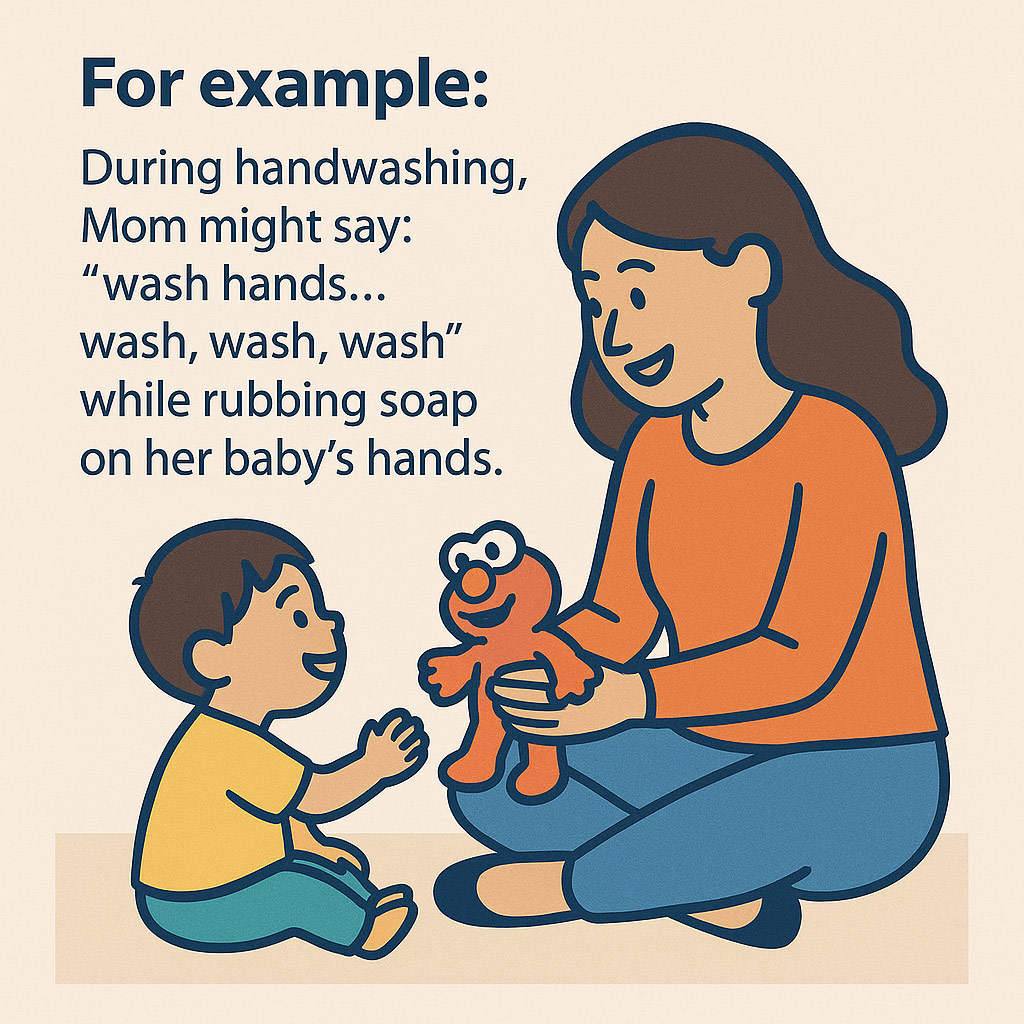
For example:
During handwashing, Mom might say: “wash hands… wash, wash, wash” while rubbing soap on her baby’s hands.
During play, she might sit on the floor and say: “Elmo eats… eats banana” while showing Elmo a pretend banana.
The first words a child uses are typically the ones caregivers use most often. Hart and Risley found that 86–98% of a child’s first words are taught by caregivers. Parents should start by labeling everyday people and objects, using exclamations (uh oh, wow), animal sounds, and simple action words (eat, go, sleep, open, sit).
Research and Recommendations
Erik D. Thiessen, PhD (Carnegie Mellon University), found that infants learned words 25% faster when child-directed speech was used.
Child-directed speech is described as:
Slower
Repetitive
High-pitched
Sing-song tone
Prolonged vowels
Clear articulation of each word
While designed for young babies, this method also works well for many 2–3-year-olds with language delays. It grabs attention and helps sustain focus on language tasks.
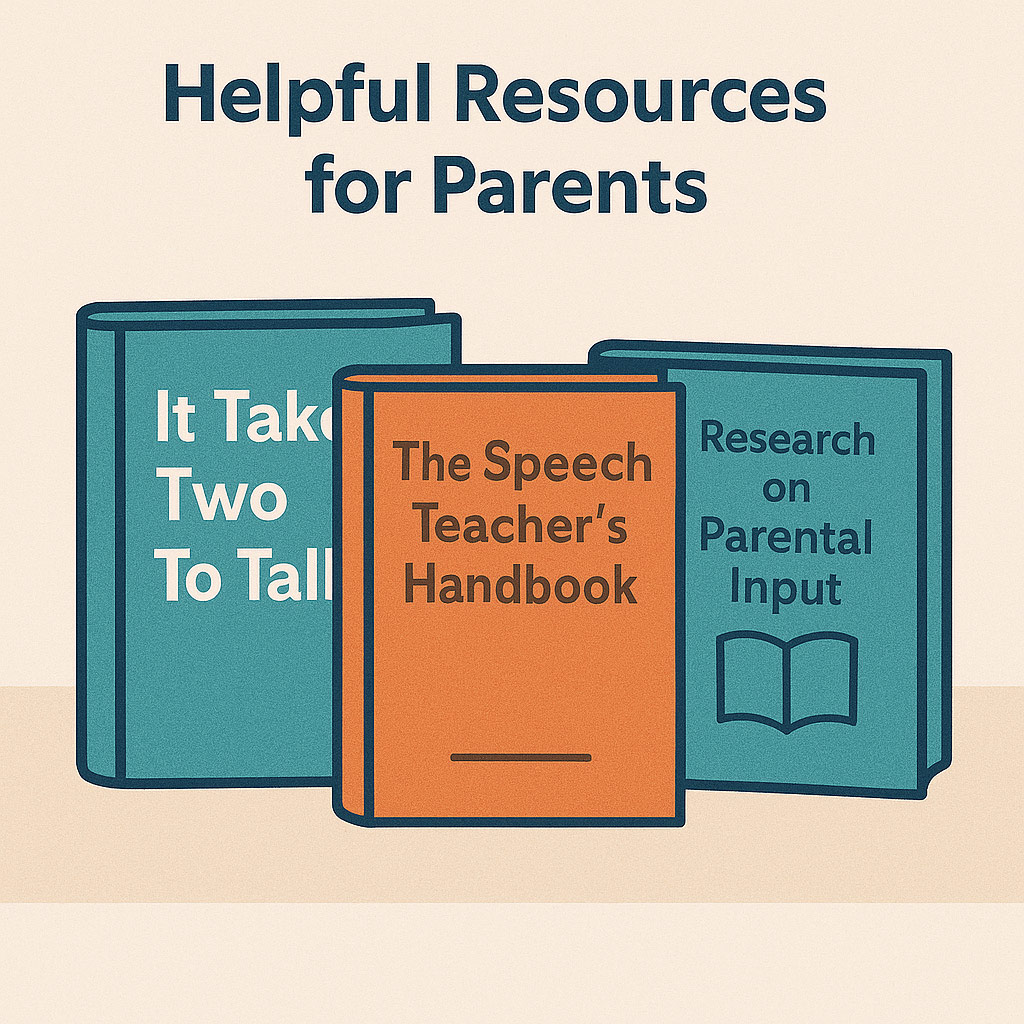
Helpful Resources for Parents
It Takes Two To Talk by the Hanen Program – written for families with language-delayed children but useful for all families learning how to stimulate language.
The Speech Teacher’s Handbook – another great tool for parents.
Research by Betty Hart and Todd Risley – foundational studies on parental input and language development.
Reference
www.urbanchildinstitute.org/why-0-3/baby-and-brain
We are a participant in the Amazon Services LLC Associates Program, an affiliate advertising program designed to provide a means for sites to earn advertising fees by advertising and linking to Amazon.com. Some links may be affiliate links. We may get paid if you buy something.